Free guide · no email required
Dealer SEO Best Practices for 2026
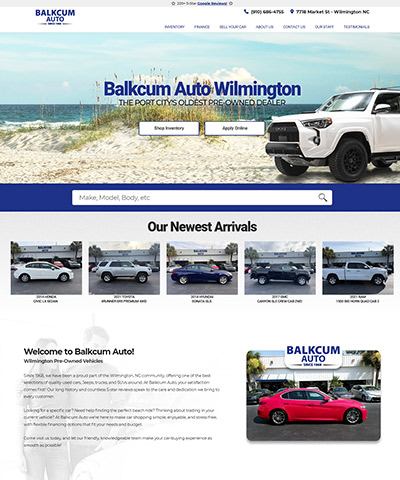
Here are the dealer SEO practices that still work after Google's March 2026 spam and core updates, in the order I'd do them at a real lot: fix your Google Business Profile first, put the vehicle type and your city in your page titles, write one real page per body style, describe every vehicle uniquely, build a review system, and earn local links. Two old standbys - templated city pages and mass price-bracket pages - now get dealer sites de-indexed, and I'd delete them before doing anything else.
That's the whole guide in one paragraph. The rest is how to do each piece, and why the order matters. I've built dealer websites for over twenty years, most of them for independent lots starting from zero, and everything below comes from that work - including the mistakes.
First: what died in March 2026
Google shipped a spam update on March 24 and a core update on March 27. The spam policies now name scaled content abuse directly: large numbers of pages generated to catch rankings rather than help a buyer. For dealers, that's two specific products vendors still sell:
- Templated city pages. "Used cars Gastonia," "Used cars Concord," "Used cars Kannapolis" - same page, city name swapped, sometimes run through AI so the words differ. Google treats these as doorway pages, and de-indexing is how it responds. Rewording them doesn't fix them.
- Mass price-bracket pages. "Used cars under $5,000 / $6,000 / $7,000..." - forty near-identical pages built from one template. Same problem, same outcome.
If your site has these, removing them is best practice number zero. A pile of thin pages doesn't just fail to rank - it drags down the pages that deserve to.
1. Max out your Google Business Profile before touching the website
For a local dealer, the map pack sits above the organic results on almost every search that matters. A lot ranking 6th organically but showing in the map pack wins that search. So the profile comes first:
- Fill in every field. Exact legal business name - no keywords stuffed into it, which is a suspension risk.
- Upload 20+ real photos: the lot, the office, the team, the inventory. Phone photos beat no photos every time.
- Add your inventory categories under Services, and set up Products for each body style, each linked to the matching page on your site.
- Post weekly and update hours every time they change, including holidays. Google reads an active profile as an open business.
2. Put the vehicle type and your city where Google looks first
Your page title and H1 are still the strongest on-page signals you control, and most dealer sites waste them on things like "Home" or "Quality Pre-Owned Vehicles." The pattern that works is plain: what you sell + where you are. "Used Trucks for Sale in Hickory, NC" beats a slogan every day of the week.
Check your own market: search your city plus "used trucks" and look at the titles on page one. In most markets, almost no independent lot does this. That's the gap you walk through.
3. Build one real page per body style
One generic inventory page can't rank for "used SUVs," "used trucks," and "used sedans" at the same time. A dedicated page for each body style you carry can - if it has its own title, its own H1, and at least 200 words written the way a salesperson actually talks: who buys these, what they're looking for, what you usually have on the lot.
An inventory feed with no words around it is thin content. After March, thin content isn't just dead weight - it's a liability.
4. Write a unique description for every vehicle - the 3-minute method
Most platforms pull window-sticker data as the vehicle description. Every dealer on that platform gets the same spec sheet, which means duplicate content across thousands of sites. The fix costs three minutes per car:
- Walk the car with your phone recording and talk for a minute - where it came from, what the service history shows, what you'd point out to a friend who asked about it.
- Paste the transcript into AI and ask for a tight 120-word write-up. Read it, correct anything it got wrong, post it.
This is the single highest-value habit on this list, and almost no dealer keeps it up. That's exactly why it works.
5. Build the review system before you need it
Review volume and recency move local rankings, and reviews are half of what convinces a buyer to make the drive. The system that works is not "send an email three days later" - it's:
- Make the ask at the handshake, not by email three days later. A QR code on the closing paperwork turns it into a 20-second scan at the desk.
- Snap the delivery photo on the customer's phone - it tends to ride along when they post the review, and reviews with a face and a car carry more weight with the next buyer than a page of star-only ratings.
- Answer every review inside two days. The angry ones are the audition: the next buyer judges you by how you handled the mad customer, not the happy ones.
6. Post to social - it shows up in search now
Google pulls social activity into the Business Profile panel and indexes posts from local pages. You don't need a content agency: when a vehicle hits the lot, post it - one photo, the price, two sentences - to your Google profile, your Facebook page, and Instagram. Three placements from one piece of content, and each one tells Google your business is active and current.
7. Earn local links the boring way
Skip the link-buying emails. The links that move a local dealer are the ones only a local business can get: the Chamber of Commerce member page (usually around $300-400 a year, and join the neighboring towns' too), the youth league sponsor page, the school boosters, the farmers market. Look for "logo and link" in the sponsorship benefits - a trusted local .org linking to you is worth more than fifty directory submissions, and it puts your name in front of the exact people who buy from you.
8. Schema, AI search, and the stuff vendors oversell
Schema markup is worth having - LocalBusiness on your contact page, Vehicle markup on inventory - but it's a supporting signal, not a strategy. If someone quotes you hundreds a month for "schema optimization," keep your hand on your wallet.
Same for "AI SEO" or "GEO" sold as a separate service. ChatGPT, Gemini, and Google's AI Overviews lean on the same things this guide already covers: a complete Business Profile, real reviews, and pages that answer real buyer questions. Do the list above and you are doing AI search optimization - anyone charging you twice for it is charging you twice.
The honest summary
None of this is secret. It's work, done in order, that most dealers never get to because they're busy running a lot - which is the entire reason it still works. One dealership near Charlotte ran this exact playbook with us starting in February 2026 and grew its profile-to-website clicks 526% in 90 days. The full numbers are here, including the ones that went down.
Want it done for you? This playbook, run monthly, is our Automotive SEO plans - from $150 a month, every deliverable listed publicly, month-to-month, no contract. Or take this page and run it yourself. Either way, do it in order.
Questions about your lot's search picture?
Call or text. We'll give you straight answers, even if the answer is "you can do that part yourself."